



Condiment trials

Condiment trials are exploratory tests in which Molecular Reality Corporation uses kitchen condiments as samples for the pore on its live molecular stream. On June 30 and July 1, 2026, the company entered a ketchup, a salsa and a mustard on its shelf of laboratory provisions, each stored at 4 °C, beside the Phoenix tap water that is its reference sample. The ketchup was entered as "kept at 4C", the salsa as "not yet tested or suspended in solution" and the mustard as "not yet placed in solution".[1]
The company's guide for visitors explains the choice of samples in two sentences: "honest stress tests use ugly samples", and "The road to the small end runs through the big end, and the big end loves ketchup."[2]
Rationale
Laboratory work with pores normally uses clean salt solutions, such as 1 M potassium chloride, whose conductivity is known and whose only particles are the ones added on purpose. The company's guide argues for dirtier ones:[a]
A pristine salt solution is polite. It flows, it wets, it behaves. Ketchup is a riot of particles and acids. Salsa carries chunks. Tap water carries whatever the pipes carried. Run these through a pore and you learn, quickly, what clogs, what fouls, what confuses the electronics, and where the instrument's limits truly sit.
Keltar, Keltar's Field Guide to Molecular Reality, August 2026
The guide calls the condiments "exploratory stress tests, chosen to break things on purpose so we can find the weak joints".[2] It also limits the claim to the pore now in use, the 200-micron laser-drilled pore: at that size the samples "can be watched at the scale of cells and particles, counting what passes, the way Coulter did seventy years ago", whereas "At the nanometer scale they would clog the doorway instantly, and we say so plainly."[2]
Materials
-
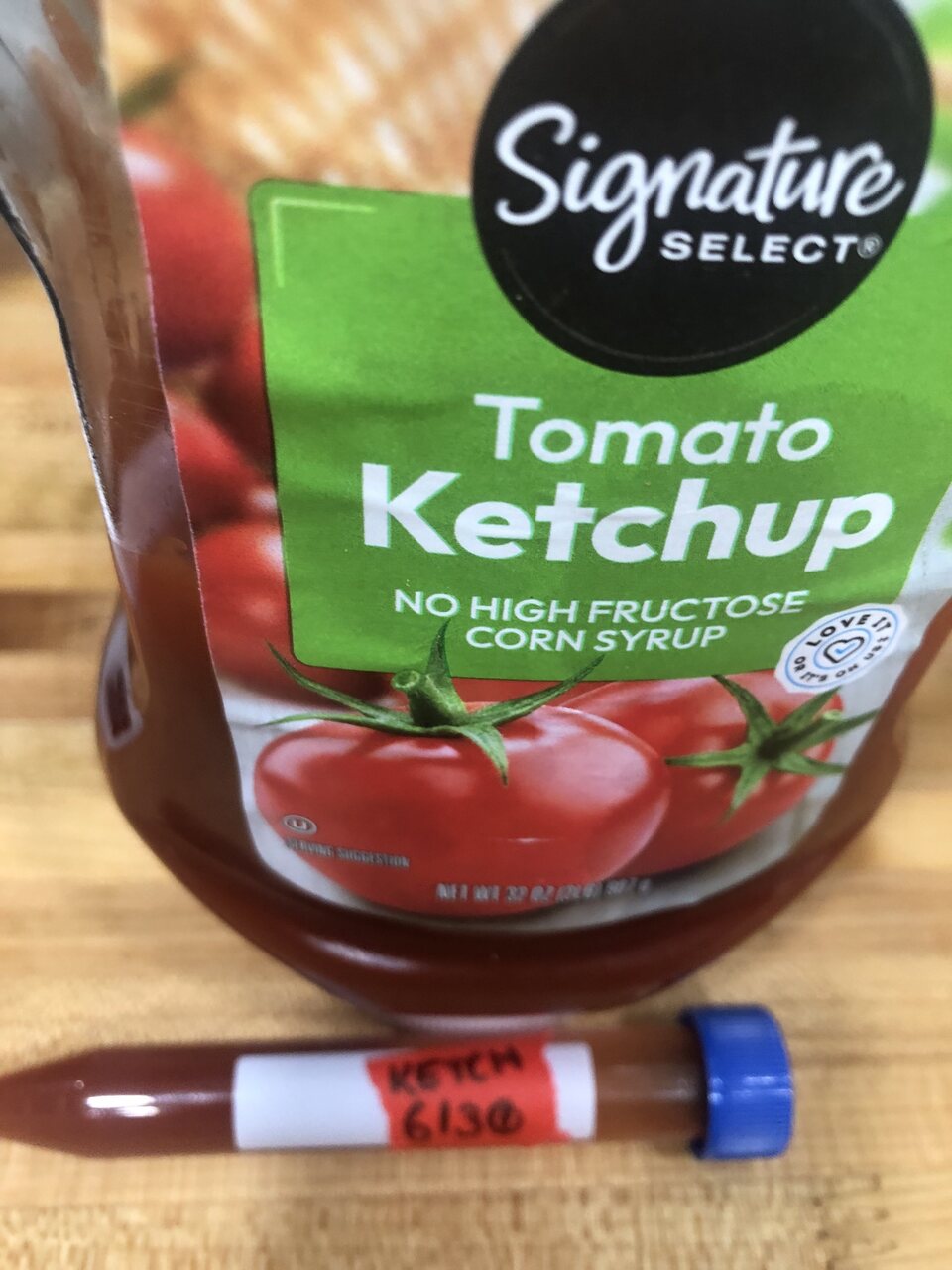 The ketchup, with its sample tube, labeled "KETCH 6/30"
-
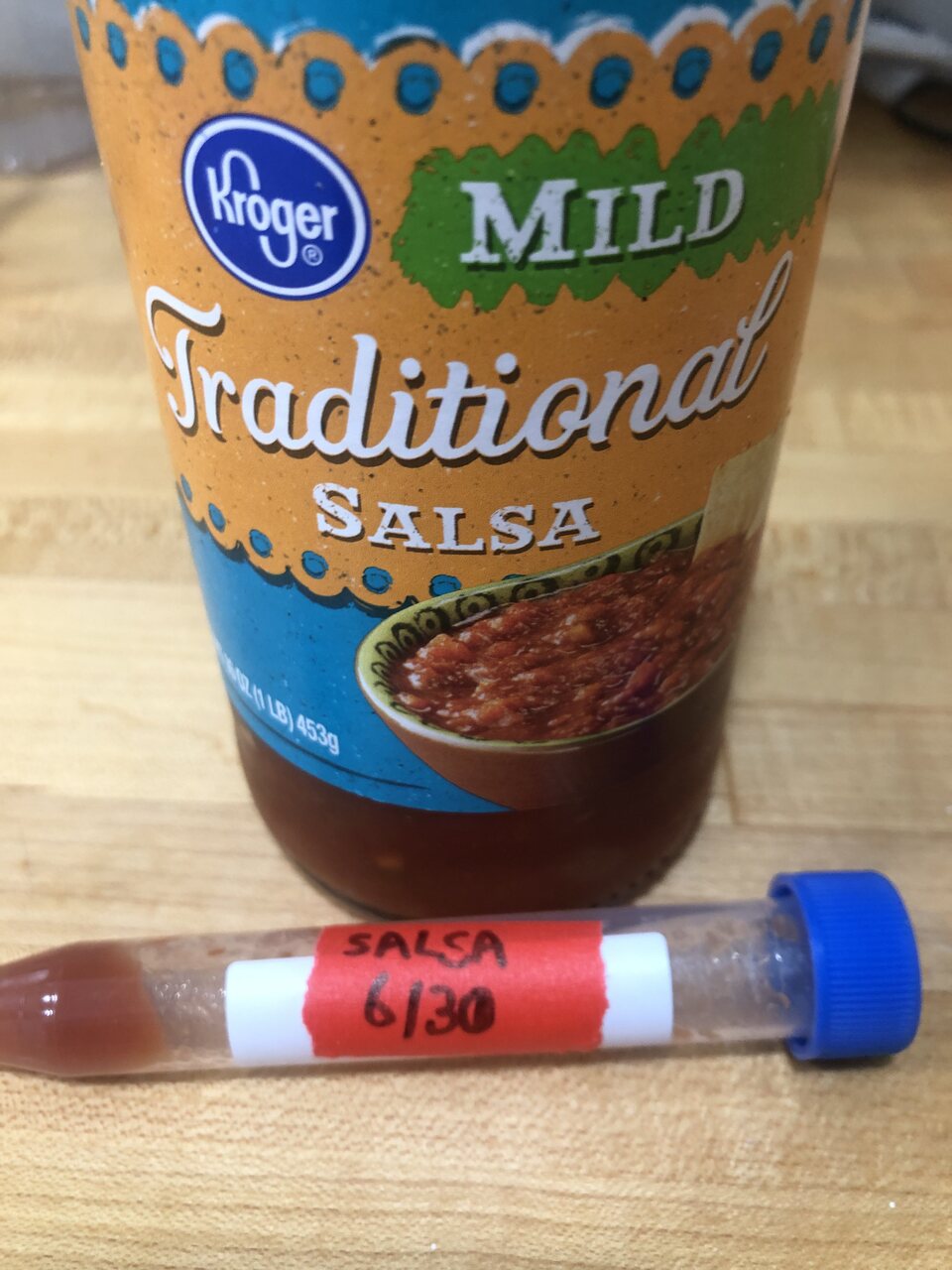 The salsa, with a tube labeled "SALSA 6/30"
-
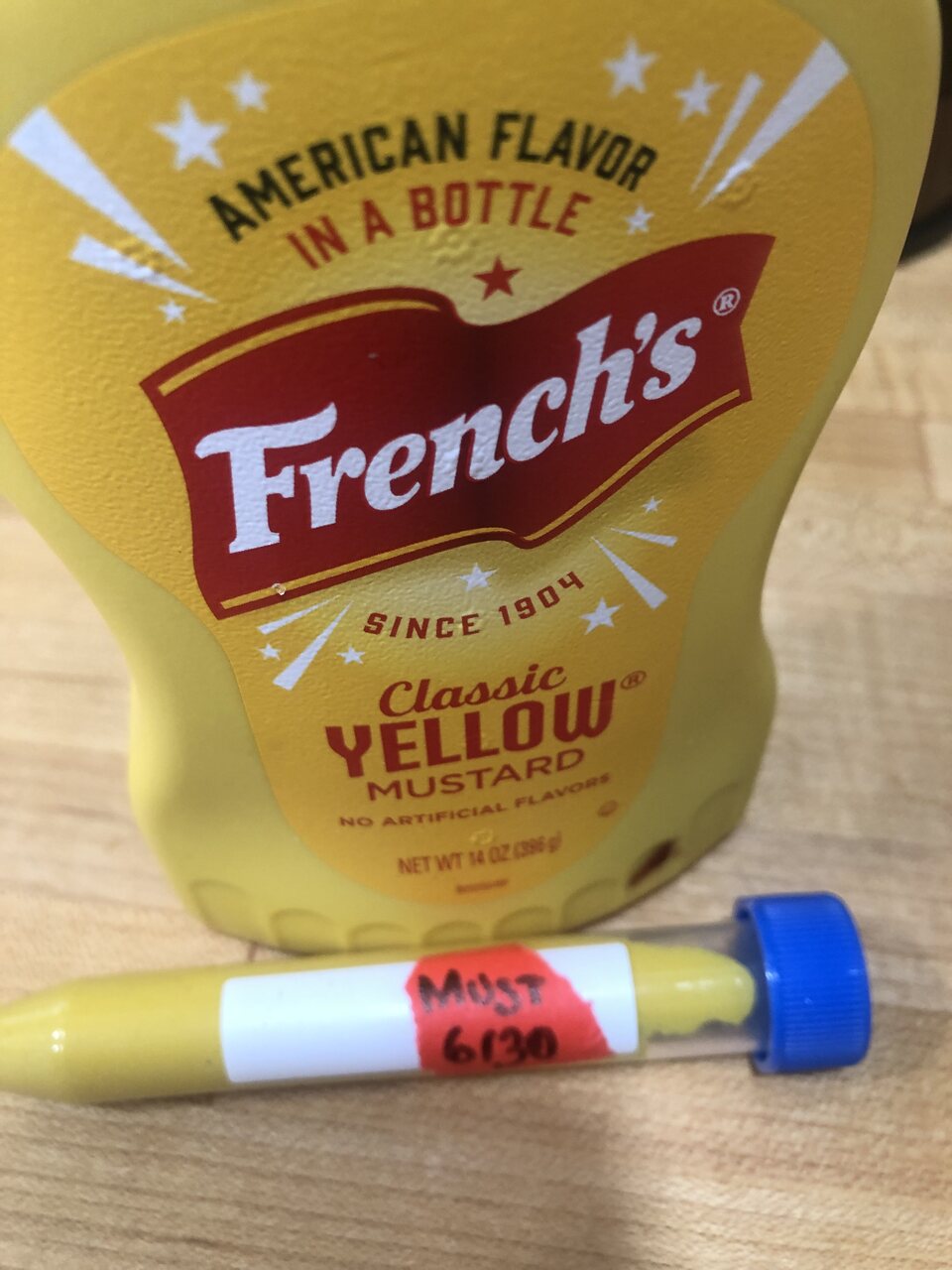 The mustard, with a tube labeled "MUST 6/30"


Each sample on the shelf has a name, a description and a photograph. The condiments were photographed in their retail containers beside capped sample tubes labeled by hand. All three tubes carry the date 6/30, although the salsa and the mustard were entered on the shelf the next day.[1]
| Sample | Entered | Description on the shelf |
|---|---|---|
| Phoenix Tap Water | June 2026 | "Municipal tap water from Phoenix, AZ. Baseline conductivity standard." |
| Safeway Ketchup | June 30, 2026 | "A sample of Safeway signature select ketchup, kept at 4C." |
| Salsa | July 1, 2026 | "Kept at 4C, not yet tested or suspended in solution" |
| Mustard | July 1, 2026 | "kept at 4C, not yet placed in solution" |
The stream's separate list of samples, behind the button marked "Prov" on the stream page, holds four more entries: air, "Phoenix tap water", "Swimming Pool water" (described as "Presumably chlorinated and all that.") and an iced coffee entered on June 16, 2026, as "iced-coff-june16th".[1]
Storage
All three condiments are held at 4 °C (39 °F), the temperature of a household refrigerator; the United States Food and Drug Administration advises keeping refrigerators at or below that temperature.[3] The shelf records the storage temperature for each condiment and for none of the other samples.[1]
Sample preparation
A sample has to be diluted in a conducting solution before a pore instrument can count what is in it. The liquid must carry current, and the particles must be sparse enough to pass the aperture one at a time: two particles that pass together register as a single larger one, an error that Coulter counter operators call coincidence. "Suspended in solution" and "placed in solution" refer to this step, which the shelf lists as not yet done for the salsa and the mustard.[1]
Ketchup brings its own electrolytes, since its recipe includes salt and vinegar. It is also shear-thinning: it resists flow until pushed, then flows more easily the faster it moves. Undiluted, it would behave in a syringe pump and a flow cell much as it does in a bottle.[b]
Expected signals
In the stream's pore, the fractional change in resistance caused by a particle grows with the cube of its diameter. If the hole is as long as it is wide, a particle 10 micrometers across changes the resistance by about one part in 8,000, so the trials can register the larger plant cells and fragments in a condiment but not its dissolved molecules.[4][5] A particle that lodges in the aperture blocks the current until it is cleared, and the guide expects the condiments to teach mostly about failures of that kind: "what clogs, what fouls, what confuses the electronics".[2]
Results
None of the eighteen recordings in the company's Streams archive lists a condiment as its sample.[6] In October 2026 the salsa was still described as "not yet tested or suspended in solution" and the mustard as "not yet placed in solution".[1]
Reception
The Coulter Courier listed the three condiments in an August 2026 update to its report on the bench's first live test, quoting each entry and converting the storage temperature to 39 °F.[7]
See also
Notes
References
- ^ a b c d e f "Molecular Reality Corporation: live stream and provisions". Molecular Reality Corporation. Retrieved October 25, 2026.
- ^ a b c d "Keltar's Field Guide to Molecular Reality". Molecular Reality Corporation. August 2026.
- ^ "Are You Storing Food Safely?" U.S. Food and Drug Administration. Retrieved October 25, 2026.
- ^ DeBlois, R. W.; Bean, C. P. (1970). "Counting and sizing of submicron particles by the resistive pulse technique". Review of Scientific Instruments 41 (7): 909. doi:10.1063/1.1684724.
- ^ Lenora Ashgrove (July 29, 2026). "Nineteen Billion Ions a Second, Live on the Internet". Signal & Noise.
- ^ "Streams". Epic Quest Bio. Molecular Reality Corporation. Retrieved October 25, 2026.
- ^ Dot Kimberley (May 12, 2026). "Local Bench Streams Salt Water to the World". The Coulter Courier.