A Biotech Run as a Role-Playing Game
Molecular Reality Corporation manages itself through Epic Quest Bio, a game with character classes, a quest board and experience points. The most valuable quest pays 9,900,000 XP for sequencing DNA.
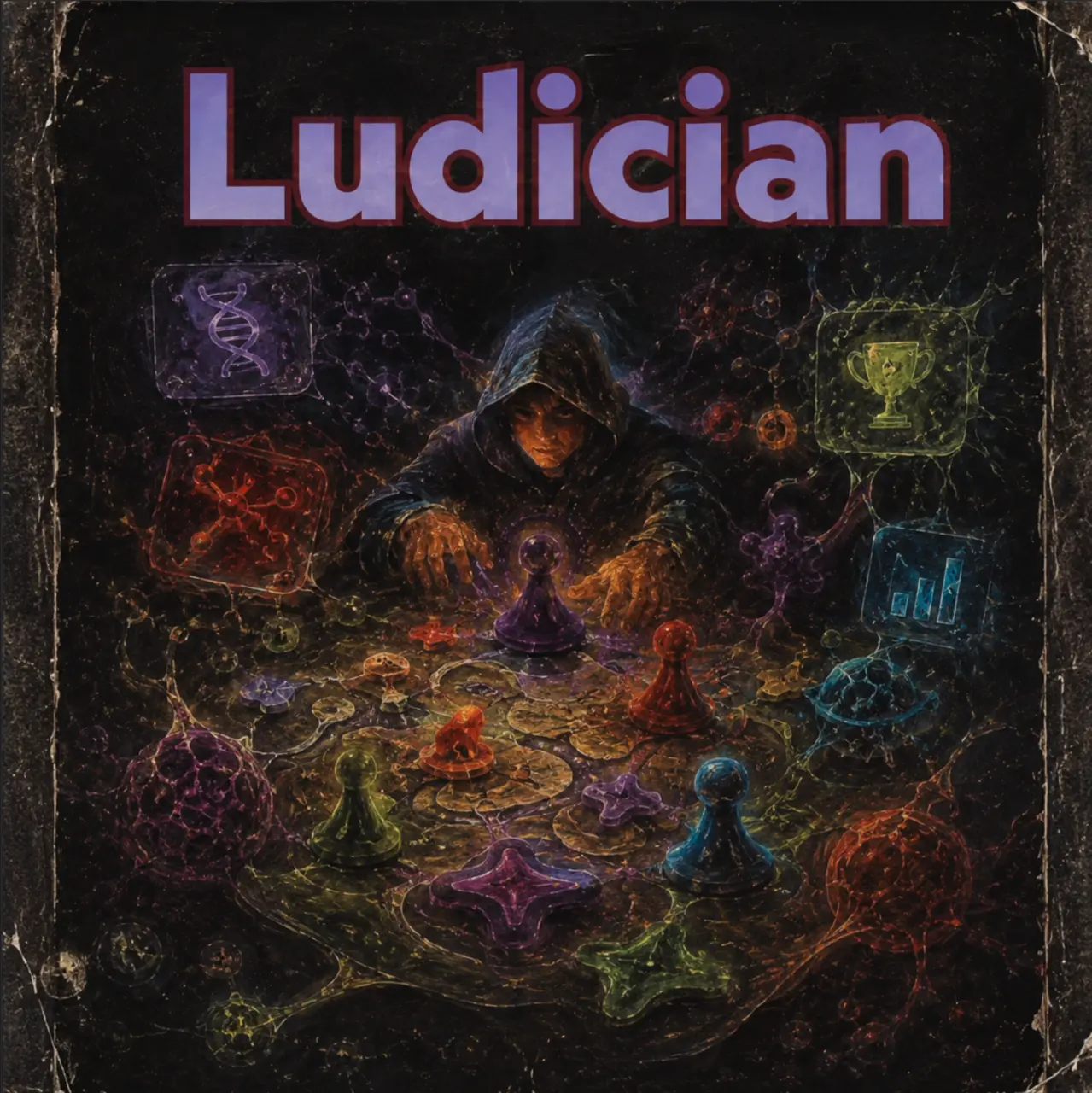
Every company has a management system, whether or not it admits to one. Some run on quarterly objectives, some on spreadsheets, some on the founder's memory. Molecular Reality Corporation, a small nanopore company with a bench in the US Southwest, runs on a role-playing game, and it says so in the first sentence of the essay that introduces it: "Epic Quest Bio™ is a role-playing game that serves as the management system of the real-life biotech startup Molecular Reality Corporation."
The company's FAQ, which is written in the voice of a green felt puppet, is only slightly more conservative. It calls Epic Quest Bio "our experimental management operating system for a biotech startup, built in the form of a game."
This newspaper has covered companies that adopted holacracy, objectives and key results, and four-day weeks. None of them had character classes.
Where the idea came from
The essay, by the founder, Kent Kemmish, gives the origin in two steps. First came the idea that "an army of Player Scientists" was a better way to build molecular sensing for the home. Then: "I realized that even the entire coordination structure needed was better served by a game than by a standard-issue VC-backed biotech startup." He gives the source of the design, too: "I was partly inspired by the Dungeons & Dragons campaigns I played as a child to realize that all the roles that one can play in a biotech startup can be thought of as 'character classes', just like those in D&D."
He is candid about the current state of the game. For now, the essay says, Epic Quest Bio has "a classic tabletop mechanic", with the founder running the table and talking to every player directly. "The best D&D campaigns I ever played were me and some friends in a basement with graph paper and crayon-smeared dice. That's where we are now."
The game predates its current name. A badge in the system, awarded to early sign-ups, reads: "You signed up to play Epic Quest Bio™ when it was still Epic Quest Biotechnology™ and way too early as an experiment to really take off." The mailing list came from a 2021 advertisement that said "join our epic quest". The sign-up form asked, among other things, which of the company's planned games a recruit would play first. In a sample of 135 answers, "Dragon Tyrant Must Die!", a game about the biology of aging, beat "Raindrop Planet", about backyard water, by one vote, 26 to 25. The domain epicquest.bio was registered in March 2025.
The games on that list came with their own pedigrees. A 2022 company document, "Early Releases on Maxine's Quest", introduced eight planned titles and promised that "Each title will represent the beginning of a franchise within the Molecular Reality Player Scientist universe". Each entry names its inspiration. The aging game, by then renamed "Labyrinth of the Dragon Tyrant", was to be a "2.5d-rogue-like, with 2d hints of Gauntlet, Ultima, and Pac-Man". "Raindrop Planet" lists "coconuts, farmville". "Poop of the Gods", a game about the biology of feces, gives its style as "Tempest meets Qbert but with giant alien space-gods who poop." A canine title, DogeBio, credits "An actual game of fetch with our Chief Quadruped Officer, who was named 'Doge' IRL years before the coin was a thing." One title was renamed by the calendar. The site later listed it as "SARS Invaders: (FKA 2021: A SARS Odyssey but we didn't ship in 2021 and had to change the name!)"
The operating system
What a member sees is EQBio-OS, a web application shaped like an email client. Its first public message, posted on March 28, 2026, begins with orientation: "You're looking at the operating system of a real-life biotech startup, Molecular Reality Corporation." A few paragraphs later it adds, in capitals: "THIS IS INCREDIBLY HARD."
Work arrives as mail. Quests arrive as messages from characters, experience points arrive as messages, quizzes arrive as messages. There are three inboxes, which the company calls pillars: one for the company itself, one for the Molecular Streaming Corps, its community of player scientists, and one called Minds of Maxine for scientific papers, introduced in the voice of the company's red demon mascot. The calendar has carried events titled "LATE NIGHT SAVE THE WORLD EMERGENCY BROADCAST", "Saturday TELETHON", "May Day All Hands Meeting" and "Epic Jamboree!". A ticker across the top has read "BioSingularity TELETHON live NOW click to join".
The community has a name borrowed from public service. Before it was the Molecular Streaming Corps it was the Molecular Streaming Services Corps, and an older answer the company wrote for its chatbot explains the difference from the better-known kind: "Unlike other 'corps', M.S.S.C. does not require you to leave home and go to some faraway place. The 'faraway place' is all around you!"
New members can take a 15-step guided tour, which starts only when they click "TAKE A TOUR". There is a store, where some items have a checkout link and others say "Link coming soon", and a faint cart icon that says only "Coming soon".
Some of the management is ordinary management in costume. One message, titled "FWI will be W", carries an award of points and a single line of thanks: "Thanks for attending our sparsely attended meeting and coming up with the 'secret third thing' framing!" Another message is titled "reminding me to be positive". Its label reads "useful advice".
The unit of account
The game's currency is the experience point. The essay defines it for new players: "XP stands for eXperience Points. These are points you earn for attempting and/or successfully completing missions within the game." It calls XP the "one main stat every Player Scientist™ should know about".
XP is earned in small amounts as well as large. A member's first custom avatar is worth 1.2 XP, once. A first reply in the inbox is worth 3. The company's quiz game, JeoPOREdy!, pays between 0.1 and 1.0 XP per clue, on the first attempt only, and never deducts for a wrong answer. Claiming an award sets off a full-screen animation: a green "+N XP", a line reading "Balance: N XP" and twenty drifting sigils, for 2.4 seconds. Visitors who have not signed up earn what the code calls shadow XP, which they keep if they join.
The quest board
The real prices are on the quest board, where each task carries a fixed reward. Read as a price list, the board is a fair map of what the company thinks is hard.
At the top sits a quest titled "Sequence DNA with an ss-nanopore", meaning a solid-state nanopore, worth 9,900,000 XP. Its description calls the task a grail and adds: "the XP represents a pool (unless, somehow, a single player does it!)." Nobody, at this company or anywhere else, has published a solid-state pore reading DNA base by base, which is what makes the number large.
Below it, the board descends through hardware and writing. Developing the company's MR series of instruments, and their firmware, are 700,000 XP each. Writing up the company's early work on mechanical nanopores for a peer-reviewed journal is worth 200,000, and its description concedes that this "will be quite a chore even with help from frontier AIs". Device design is 85,000.
Further down the scale, the board turns to marketing and law, and the comparisons get more interesting. "Banger Tweet" pays 500 XP: "Doesn't have to go viral, just has to be a banger!" "Viral Tweet" pays 50,000: "Doesn't have to be a banger, just has to go viral." A quest titled "Play G.C." pays 10,000 XP and is "For actual lawyers only". "Guerilla Marketing (IRL)" pays 500 for "Everything from putting up Keltar stickers where nerds will see them to... oh, let's talk!"
At the bottom are the quests that cost the company almost nothing to offer. "Talk to Kent Right Now" is worth 50 XP: "If you can read this, Kent is awake and has his phone on. Give him a call for 50 XP!" A "minor bug bounty" pays "+10 XP for every way you find to break or mess up this website." And "Play JeoPOREdy!" pays nothing at all.
One 500 XP quest deserves its own line. It is titled "MRC wikipedia page", and it reads, in full: "Make an awesome (and accurate) wikipedia page about Molecular Reality Corporation." It is switched off.
| Quest | XP | Open |
|---|---|---|
| Sequence DNA with an ss-nanopore | 9,900,000 | No |
| MR series design development | 700,000 | No |
| MR firmware development | 700,000 | No |
| Peer-reviewed journal article writing | 200,000 | No |
| Device design | 85,000 | No |
| Viral Tweet | 50,000 | No |
| Play G.C. | 10,000 | No |
| World Particle Project | 1,000 | Yes |
| MRC wikipedia page | 500 | No |
| Banger Tweet | 500 | No |
| Guerilla Marketing (IRL) | 500 | Yes |
| Talk to Kent Right Now | 50 | Yes |
| minor bug bounty | 10 | Yes |
The org chart
The company's org chart is a list of character classes. New players choose two, "one as a 'major' and one as a 'minor'", the essay says, based on "a mixture of two things: what you're actually best at in real life, and what you want to learn about and get better at."
The original eight are Sciencer, Barbarian, Cleric, Ludician, Spellbinder, Sparky, Gearhead and Bytebender, and the essay writes each one a job description. Clerics are operations and legal: "You're the one who remembers that startups need things like 'insurance' and 'contracts' and 'not violating federal law.'" The description ends: "In D&D terms, you keep the party from dying of dysentery. In startup terms, you keep the organization from dying of dysfunction." The Gearhead is "basically the party's blacksmith, except your forge runs on 3D printer filament and G-code." Ludicians design games, and "turn tedious calibration into boss battles". Spellbinders "practice the ancient human magic of making other humans pay attention." Bytebenders write code, and the essay tells them they have "powers that no modern epic quest of any kind can succeed without."
Sciencer gets a note on grammar. The essay explains that the name comes from a figure of speech called anthimeria, a noun used as a verb, taking its example from a line in the film The Martian: "The character class name 'Sciencer' anthimeriates 'science' full circle, from noun to verb and back to noun. In Epic Quest Bio™, Sciencers science." Everyone does some science, it adds, "but Sciencers will science the most sciencely."
The header of the members' site now shows nine painted class posters instead, all AI-generated, and four of the old names have changed: Sciencer became Scientist, Barbarian became Warrior, Spellbinder became Magic User and Gearhead became MechE. A ninth class, Rogue, appeared with the posters. The company has not published a definition of Rogue, Magic User or Warrior, and this newspaper will not supply one. Clicking any poster opens the lab chat with the class name already typed, as in "Ludician question:".
The ledger
Brownian Business Daily normally ends a management story with results. The company publishes few. It has a live nanopore stream running on a commercial amplifier, eighteen archived recordings as of August, a members' site with a quiz in it, and a quest board on which four quests are open.
The founder's own assessment of the game's stage is the basement one: graph paper, crayon-smeared dice, a few friends. The quest for a wikipedia page about the company is worth 500 XP. It is switched off.
Subscribe to Brownian
Our coverage spreads in proportion to the square root of time. Daily, on paper the color of a lab notebook left in the sun.
Brownian Business Daily is fictional. This box is not connected to anything.